
Laparoscopy Treatment in Ahmedabad for Infertility and Gynecological Conditions
When other tests cannot identify the underlying cause of infertility, doctors may need to directly examine a patient’s reproductive organs. After completing all basic fertility evaluations, your fertility specialist may recommend laparoscopy treatment in Ahmedabad to diagnose and treat conditions affecting conception.
Laparoscopy is both a diagnostic and therapeutic surgical procedure that helps identify and treat fertility-related conditions in a minimally invasive manner.
What Is Laparoscopy and How Does It Help Treat Infertility?
Laparoscopy is a surgical and diagnostic procedure used to evaluate a woman’s reproductive system.
A laparoscope is inserted into the abdomen through a small incision. The laparoscope contains a high-resolution camera that transmits images to a video monitor.
Using this advanced technology, the surgeon can visualize the uterus, fallopian tubes, ovaries, and surrounding pelvic structures to determine possible causes of infertility.
Laparoscopy treatment in Ahmedabad is less painful, requires only small incisions, and offers faster recovery compared to traditional open surgery. It helps both diagnose and treat infertility-related conditions.
Laparoscopy is also known as keyhole surgery or Band-Aid surgery.
How Can Laparoscopy Help with Infertility?
Laparoscopy for infertility is generally recommended when a woman experiences unexplained infertility despite having normal fertility test results.
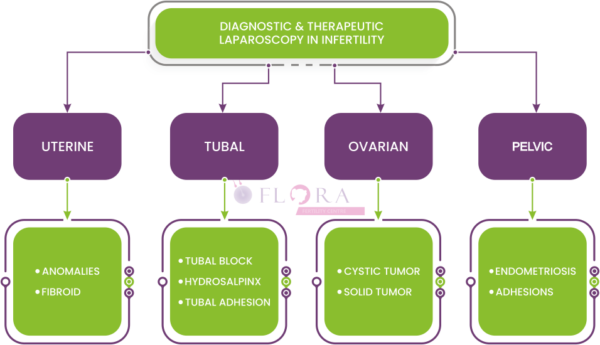
The procedure allows doctors to identify underlying fertility issues such as:
- Blocked fallopian tubes
- Hydrosalpinx
- Scar tissue build-up (adhesions)
- Endometriosis
- Fibroids
- Ovarian cysts
- Other anatomical abnormalities of the reproductive system
One of the major benefits of laparoscopy for infertility is that doctors can often diagnose and treat the problem during the same procedure.
By correcting fertility-related abnormalities, laparoscopy may improve the chances of natural conception and successful fertility treatment.
If any suspicious growth or abnormal tissue is identified, a biopsy can also be performed during the procedure.
Laparoscopy can be used to remove scar tissue, fibroids, and ovarian cysts while treating conditions such as endometriosis and hydrosalpinx.
The laparoscopy for infertility success rate often improves when underlying reproductive conditions are accurately diagnosed and treated.
Can Laparoscopy Treat Endometriosis and Improve Fertility?
In endometriosis, endometrial tissue grows outside the uterus instead of lining it.
This condition may cause:
- Severe pelvic pain
- Heavy menstrual bleeding
- Inflammation of the fallopian tubes
- Scar tissue formation
- Infertility
Endometriosis can damage reproductive organs and interfere with natural conception.
Laparoscopy helps resolve this condition by identifying and removing endometriosis lesions while preserving reproductive structures whenever possible.
Treating endometriosis through laparoscopic surgery for infertility may improve fertility outcomes and increase the chances of conception.
How Does Ovarian Cyst Laparoscopic Surgery Help Fertility?
Ovarian cysts are fluid-filled sacs that may sometimes cause pain, discomfort, and fertility-related concerns.
When cyst removal becomes necessary, ovarian cyst laparoscopic surgery is often considered the preferred treatment option.
Using minimally invasive techniques, surgeons can remove ovarian cysts while preserving healthy ovarian tissue and maintaining reproductive function.
This approach helps reduce pain, shorten recovery time, and support future fertility.
Can Fibroids Be Removed Through Laparoscopic Surgery?
Myomectomy is the surgical removal of fibroids from the uterus.
Fibroids can cause:
- Pelvic pain
- Heavy menstrual bleeding
- Distortion of the uterine cavity
- Difficulty conceiving
Fibroids laparoscopic surgery allows surgeons to remove fibroids through small incisions with minimal disruption to surrounding tissues.
Myomectomy performed through laparoscopy offers faster recovery, reduced pain, and improved reproductive outcomes for suitable candidates.
How Does Laparoscopic Surgery Treat Uterine Adhesions?
Lysis of uterine adhesions is a procedure used to remove scar tissue and adhesions affecting the uterus and surrounding pelvic structures.
Adhesions can interfere with fertility by altering normal reproductive anatomy.
Laparoscopic adhesiolysis helps restore normal pelvic function and may reduce the risk of future adhesions.
This form of laparoscopic surgery for uterine conditions can improve fertility potential and increase the chances of conception.
Laparoscopic surgery is an excellent option for women facing infertility-related conditions.
Compared to traditional surgery, laparoscopy avoids large open wounds and allows faster recovery.
How Is a Laparoscopy Procedure for Infertility Performed?
The laparoscopy procedure for infertility is a minimally invasive surgery performed under general anesthesia.
After administering anesthesia, the surgeon inserts a laparoscope into the abdomen through a small incision.
Gas is gently introduced into the abdominal cavity to create space and improve visibility of the reproductive organs.
This allows the surgeon to thoroughly examine:
- Uterus
- Fallopian tubes
- Ovaries
- Pelvic cavity
- Surrounding reproductive structures
The next steps depend on the findings.
If an abnormality is detected that requires treatment, an additional small incision may be created to perform the necessary surgical correction.
Conditions such as endometriosis, adhesions, fibroids, ovarian cysts, and even selected cases requiring ectopic pregnancy laparoscopic surgery may be managed through this approach.
Once the procedure is completed, the surgeon removes the instruments and closes the incision sites.
The patient remains under observation for a few hours before being discharged.
Mild pain and discomfort may occur after surgery.
Some patients may also experience temporary pain in the shoulders and abdomen as the gas used during surgery is absorbed by the body.
Is Laparoscopy Safe? What Are the Possible Side Effects?
Laparoscopy is considered a safe procedure, and complications are relatively uncommon.
Approximately 1% to 2% of women may experience postoperative complications such as:
- Bladder infection
- Adhesions
- Infection at the incision site
- Hematomas in the abdominal wall
Patients should promptly report any unusual symptoms or concerns to their doctor.
How Long Is Recovery After Laparoscopic Surgery?
Following surgery, patients remain under observation to ensure there are no complications.
Depending on their physical condition and recovery progress, most patients are discharged within a day.
Compared to traditional open surgery, recovery after laparoscopy treatment in Ahmedabad is significantly shorter.
Patients are usually prescribed:
- Pain-relief medication
- Antibiotics to help prevent postoperative infection
Most individuals can resume normal daily activities within 2 to 3 days.
This quick recovery is one reason why many patients searching for laparoscopic surgery near me prefer minimally invasive fertility procedures.
How Does Laparoscopy Improve the Chances of Pregnancy?
Laparoscopy is a valuable tool for diagnosing and treating many gynecological conditions associated with infertility.
By identifying and correcting conditions such as:
- Endometriosis
- Fibroids
- Ovarian cysts
- Adhesions
- Blocked fallopian tubes
- Hydrosalpinx
The procedure may significantly improve reproductive outcomes.
For women considering laparoscopic surgery for pregnancy planning or fertility treatment, laparoscopy can help create a healthier reproductive environment.
It is also useful in evaluating and treating the underlying causes of infertility that may not be detected through routine fertility testing.
Whether used as part of fertility treatment or laparoscopic surgery for family planning, laparoscopy may increase the chances of natural conception and successful pregnancy.
Its ability to both diagnose and treat fertility-related conditions during a single procedure makes it an important component of modern reproductive care.