
Hysteroscopy Surgery in Ahmedabad for Infertility & Uterine Health
What is Hysteroscopy?
Hysteroscopy surgery in Ahmedabad is a minimally invasive procedure that enables the surgeon to view the internal structures of the uterine cavity without the need for any abdominal incision.
The uterine cavity is carefully examined to identify any intrauterine abnormalities and assess the opening of the fallopian tubes. During the hysteroscopy procedure, the doctor may also remove polyps, treat abnormalities, or take a biopsy sample for further evaluation.
Hysteroscopy treatment is considered a safe and effective diagnostic and operative procedure that requires only a short hospital stay. Recovery is generally fast, with minimal discomfort and no prolonged bed rest required.
When Is Hysteroscopy Needed for Infertility Treatment?
Hysteroscopy for infertility is commonly recommended to evaluate possible uterine causes of difficulty conceiving. If you are searching for a hysteroscopy near me, it is important to choose an experienced fertility specialist who can accurately diagnose and treat uterine abnormalities.
Your doctor may suggest undergoing a hysteroscopy if infertility investigations indicate potential uterine issues.
Uterine abnormalities can be a significant cause of infertility, implantation failure, and recurrent miscarriages.
The removal of uterine polyps or scar tissue through hysteroscopy and infertility treatment can improve the chances of successful conception.
If IVF is advised, hysteroscopy may be recommended before treatment to ensure the uterus is healthy enough to support embryo implantation and a successful pregnancy.
What Can a Surgeon Treat During a Hysteroscopy Procedure?
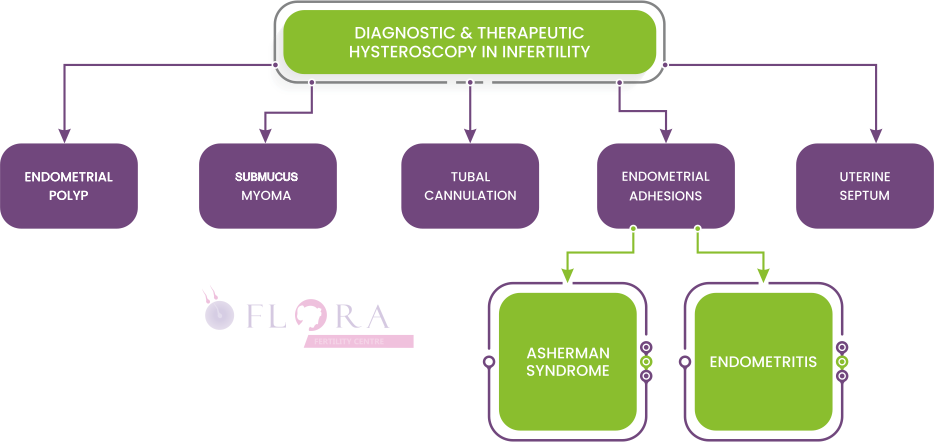
Removal of Polyps and Fibroids
Enlarged uterine polyps and fibroids can contribute to infertility and recurrent pregnancy loss. Through uterine fibroid hysteroscopy, these abnormal tissue growths can be accurately identified and removed, improving uterine health and fertility outcomes.
Locate and Remove Adhesions
Scar tissue formation inside the uterus can interfere with implantation, increase menstrual abnormalities, and contribute to infertility. During hysteroscopy, the surgeon can identify these adhesions and safely remove them.
Septum’s
A septate uterus is a congenital uterine abnormality that may increase the risk of miscarriage and fertility challenges. Hysteroscopy allows the surgeon to remove the uterine septum and improve reproductive outcomes.
Abnormal Bleeding
Hysteroscopy helps determine the cause of heavy menstrual bleeding, irregular bleeding, or bleeding between periods. Areas responsible for abnormal bleeding can be treated during the procedure using laser treatment, electrocautery, or surgical removal techniques.
Surgical procedures performed during hysteroscopy may significantly increase the chances of pregnancy in suitable candidates.
It is a safe procedure with minimal complications. Most patients can return to normal daily activities within one or two days after surgery.
How Is a Hysteroscopy Procedure Performed?
The hysteroscopy procedure is typically performed a week after menstruation, as this timing provides a clearer view of the uterine cavity.
Before surgery, the patient is given appropriate anesthesia for comfort and safety.
The surgeon then inserts a hysteroscope, which is a thin tube equipped with a light and a camera, through the vagina and cervix into the uterus.
The hysteroscope allows the doctor to examine:
- The uterine cavity
- Tubal ostia
- Uterine abnormalities
- Polyps, fibroids, adhesions, or septum
If any abnormality is detected, it can often be corrected immediately using specialized instruments passed through the hysteroscope.
Although the procedure is generally not painful, some patients may experience mild cramping.
The entire procedure usually takes approximately 30 minutes, depending on whether diagnostic evaluation alone or operative treatment is required.
In some cases, laparoscopy and hysteroscopy surgery may be recommended together to provide a more comprehensive evaluation of fertility-related conditions.
What are the Benefits of Hysteroscopy?
The benefits of hysteroscopy include:
- Requires only a short hospital stay.
- Faster recovery compared to traditional surgery.
- Less pain and reduced need for medication after the procedure.
- Avoids open surgical incisions.
- Minimal disruption to daily life.
- If required, only 1–2 days of bed rest may be advised.
- Helps diagnose and treat uterine conditions in a single procedure.
- Improves the chances of successful conception and IVF outcomes.
What Are the Possible Risks of Hysteroscopy?
Hysteroscopy is a safe procedure, and complications are very rare.
Possible hysteroscopy complications include:
- Infection
- Heavy bleeding
- Injury to the uterus
- Injury to the cervix
- Injury to the bladder
- Reactions related to anesthesia
Patients should consult their doctor if they experience any unusual symptoms after the procedure.
How Hysteroscopy Improves Fertility Outcomes?
Hysteroscopy can also help determine the causes of IVF failure, implantation failure, recurrent miscarriage, and unexplained infertility.
Altogether, hysteroscopy has a high success rate and may increase the chances of conception, successful IVF treatment, and healthy pregnancy outcomes.
Hysteroscopy surgery in Ahmedabad is considered a low-risk procedure, and hysteroscopy recovery time is generally short.
Most patients can return to normal daily activities within 48 hours after the procedure.
Undergoing hysteroscopy before IVF may help avoid failed IVF attempts by identifying and correcting uterine abnormalities before embryo transfer.
By improving the uterine environment, hysteroscopy can increase the chances of natural conception as well as successful IVF treatment.