Yoga and exercise can be useful parts of a healthy lifestyle when trying to conceive. Regular physical activity supports general health, helps manage stress, and can contribute to maintaining a healthy weight. Both men and women can benefit from choosing activities that suit their fitness levels and medical needs.
However, yoga and exercise alone cannot guarantee pregnancy or treat every cause of infertility. Understanding which activities are suitable and when to seek medical advice can help couples make informed decisions during their fertility journey.
Can Yoga and Exercise Improve Fertility?
Moderate physical activity and gentle yoga can support overall well-being while trying to conceive. They may help manage stress, improve flexibility, and support a healthy lifestyle. However, there is limited evidence that specific yoga poses directly improve fertility or guarantee conception.
The right exercise routine depends on individual health, fitness levels, and any underlying reproductive conditions.
Learn more about Fertility Exercise
Benefits of Yoga and Exercise for Fertility
Regular physical activity offers several general health benefits that may be helpful when preparing for pregnancy.
- Stress management: Gentle yoga, breathing exercises, and walking can help some people feel calmer during the process of trying to conceive.
- Healthy weight management: Physical activity can help maintain a healthy weight, which is relevant because being significantly underweight or overweight may affect reproductive health.
- Better physical fitness: Regular movement supports cardiovascular health, strength, flexibility, and stamina.
- Improved well-being: Exercise may support sleep, mood, and daily energy levels.
These benefits are not the same as a fertility treatment. Their effects on the likelihood of conception can differ from person to person.
Yoga Practices for Women Trying to Conceive
Gentle yoga may be a comfortable way for women to stay active and manage stress. Choose poses that feel natural and avoid movements that cause pain or discomfort.
1. Butterfly Pose (Baddha Konasana)
The butterfly pose involves sitting with the soles of the feet together and allowing the knees to move gently towards the floor.
How to practise:
- Sit comfortably with your back straight.
- Bring the soles of your feet together.
- Hold your feet gently and relax your knees.
- Breathe slowly for 30–60 seconds without forcing a stretch.
This pose can support hip mobility and flexibility. It is not proven to improve ovulation or increase the chances of pregnancy.
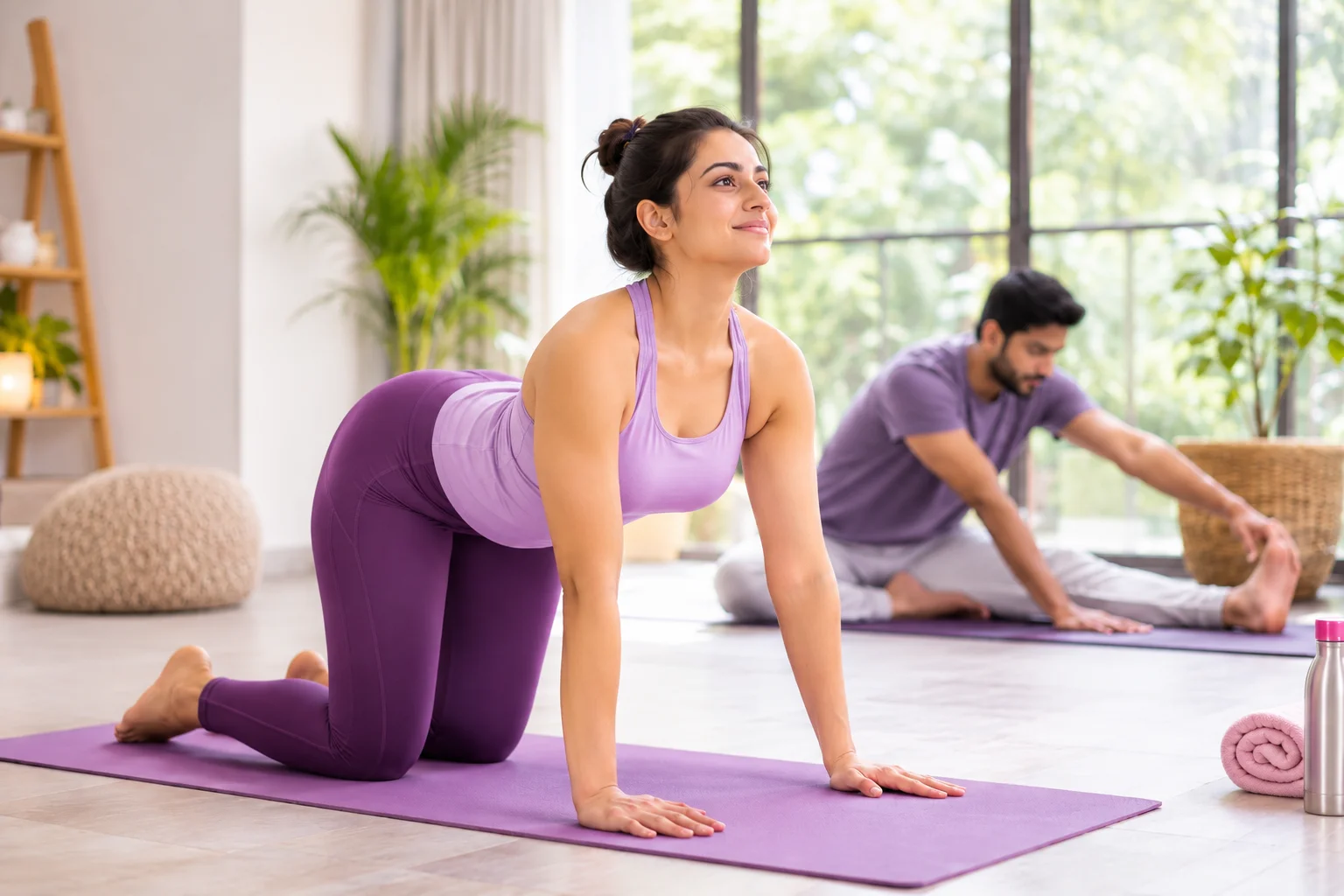
2. Cat-Cow Pose (Marjaryasana-Bitilasana)
This gentle movement involves alternating between arching and rounding the back.
How to practise:
- Begin on your hands and knees.
- Inhale and gently lift your chest while extending your spine.
- Exhale and round your back comfortably.
- Repeat slowly for several breaths.
Cat-Cow Pose can help with spinal mobility and relaxation. Keep the movements gentle and stop if you feel discomfort.
3. Legs-Up-the-Wall Pose (Viparita Karani)
This restorative position involves lying on your back with your legs supported vertically against a wall.
How to practise:
- Lie comfortably near a wall.
- Raise your legs and rest them against the wall if comfortable.
- Relax your arms and breathe naturally for a short period.
This pose may help some people relax after a busy day. There is no established evidence that it improves implantation or increases pregnancy rates.
Suitable Exercises for Men Trying to Conceive
Men’s reproductive health can also be influenced by lifestyle factors. Moderate exercise supports general health, while excessive training or the use of certain performance-enhancing substances may be harmful.
Suitable activities include:
- Brisk walking: A practical way to maintain regular physical activity.
- Cycling: Can support cardiovascular fitness. Men experiencing discomfort or prolonged cycling-related pressure should discuss suitable adjustments with a healthcare professional.
- Swimming: Provides a low-impact way to exercise the body.
- Strength training: Moderate resistance exercises can help build strength and support overall fitness.
Exercise does not guarantee improvements in sperm count, motility, or quality. Men with concerns about semen health should seek medical advice rather than relying on physical activity alone.
How Much Exercise Is Appropriate When Trying to Conceive?
For most adults, a useful general target is around 150 minutes of moderate-intensity aerobic activity each week, alongside muscle-strengthening activities on at least two days, according to standard adult physical activity recommendations.
A practical weekly routine may include:
| Activity | Suggested approach |
| Walking | 20–30 minutes on most days |
| Gentle yoga | 15–30 minutes, according to comfort |
| Strength training | Two days per week |
| Swimming or other aerobic activity | According to fitness and preference |
These are general activity examples, not a fertility treatment prescription. Beginners can start gradually and increase activity as their fitness improves.
Very intense exercise, inadequate food intake, or excessive weight loss may disrupt menstrual cycles in some women and affect reproductive health. Anyone experiencing irregular periods, persistent fatigue, or other concerning symptoms should seek medical advice.
Important Precautions Before Starting Yoga or Exercise
Keep these points in mind when planning a routine:
- Avoid pushing your body beyond its comfort level.
- Stay hydrated and eat enough to support your activity.
- Choose a qualified instructor if you are new to yoga.
- Consult your healthcare professional before starting a new routine if you have a medical condition, significant pain, or specific fertility-related concerns.
- If you are undergoing fertility treatment, ask your treating specialist which activities are appropriate for your individual situation.
No particular yoga pose, exercise schedule, or breathing technique can guarantee conception.
When Should You Consult a Fertility Specialist?
Lifestyle changes can support general health, but they should not delay the assessment of possible fertility problems.
Consider seeking a fertility evaluation if:
- You have been trying to conceive for 12 months and are under 35.
- You are 35 or older and have been trying for six months without pregnancy.
- You have irregular or absent menstrual periods.
- You have a known reproductive condition or a history that may affect fertility.
- A semen analysis has shown an abnormal result, or there are concerns about male reproductive health.
Earlier assessment may be appropriate in certain circumstances. Both partners may need evaluation because fertility difficulties can involve male factors, female factors, or a combination of both.
The American Society for Reproductive Medicine provides further guidance in its recommendations for optimising natural fertility.
Conclusion
Yoga and exercise for fertility can form part of a balanced lifestyle for men and women trying to conceive. Gentle yoga, walking, swimming, and moderate strength training can support general fitness and well-being, but they cannot guarantee pregnancy or replace medical evaluation.
At Flora Fertility Centre, fertility-related questions should be discussed with a qualified healthcare professional who can consider each person’s medical history and individual needs. A balanced lifestyle, realistic expectations, and timely medical guidance can help couples make informed decisions about their reproductive health.