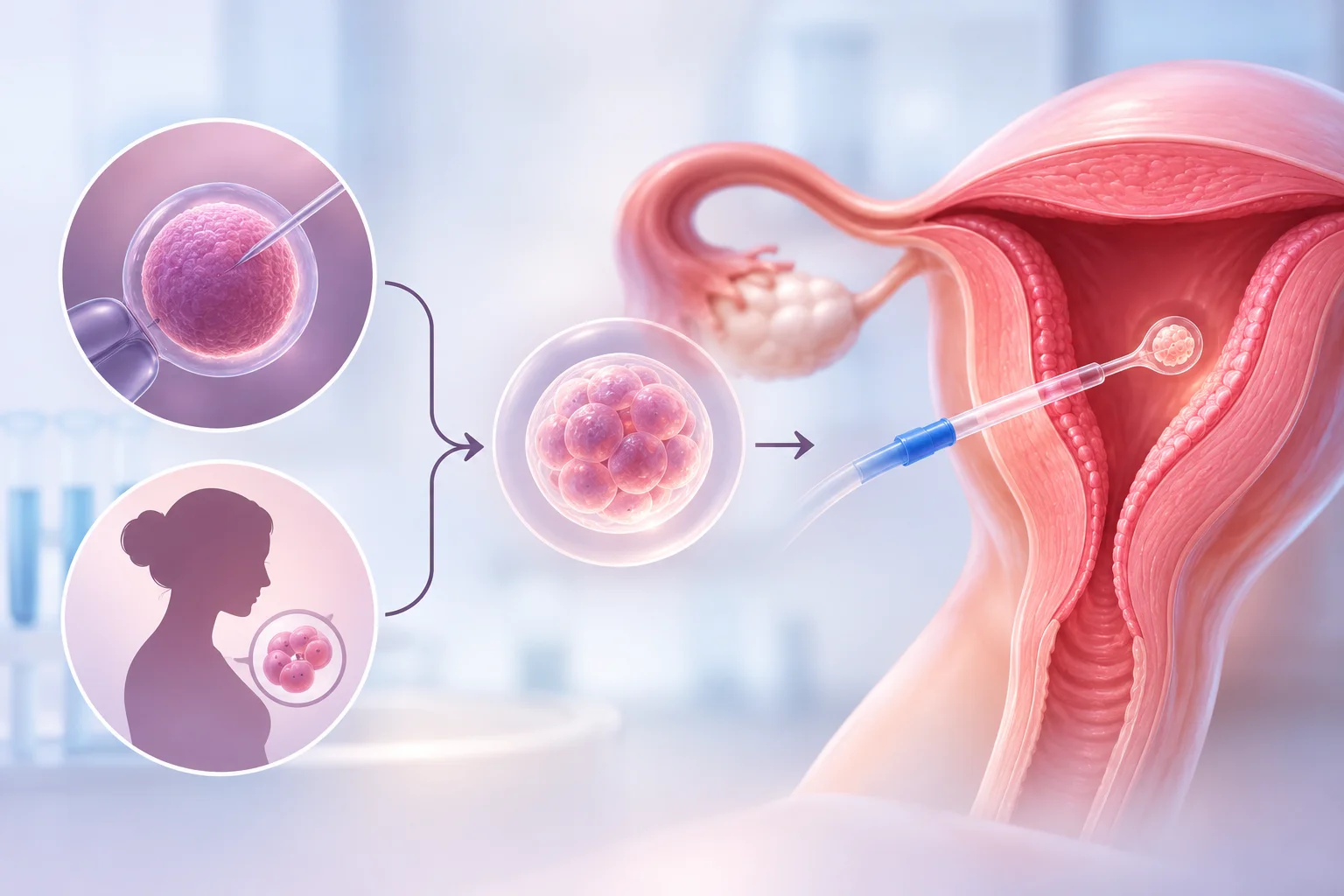
IVF with donor eggs is a fertility treatment in which eggs from a donor are fertilised with sperm in a laboratory to create embryos. An embryo may then be transferred into the recipient’s uterus. This option may be considered when a person’s own eggs are unlikely to result in a successful pregnancy or when certain genetic conditions are a concern.
Understanding the treatment process, eligibility, and possible outcomes can help individuals and couples make informed decisions about fertility care.
What Is IVF with Donor Eggs?
IVF with donor eggs uses donated eggs instead of the recipient’s own eggs. The eggs are fertilised using sperm from a partner or an appropriate sperm donor. After fertilisation, an embryo is transferred into the recipient’s uterus if the medical assessment supports proceeding.
The treatment involves donor screening, fertilisation, preparation of the uterus, and embryo transfer. Pregnancy and live birth are not guaranteed, and individual outcomes vary.
Who May Need IVF with Donor Eggs?
A fertility specialist may discuss donor eggs in the following situations:
- Diminished ovarian reserve: The ovaries have a reduced number of eggs available.
- Advanced reproductive age: Age-related changes may affect egg quality and the likelihood of pregnancy.
- Premature ovarian insufficiency: The ovaries stop functioning normally earlier than expected.
- Repeated unsuccessful IVF cycles: Previous cycles have not resulted in a pregnancy, and egg-related factors may be involved.
- Poor egg quality: The quality of eggs or embryos may affect the chances of successful treatment.
- Inherited genetic conditions: Donor eggs may be considered when a significant genetic condition could be passed on through the recipient’s eggs.
Donor eggs are not necessary for every person experiencing infertility. A specialist evaluates medical history, ovarian reserve, previous treatment outcomes, and other relevant factors before discussing this option.
How Does the Donor Egg IVF Process Work?
The donor egg IVF process involves several stages.
1. Medical Evaluation and Counselling
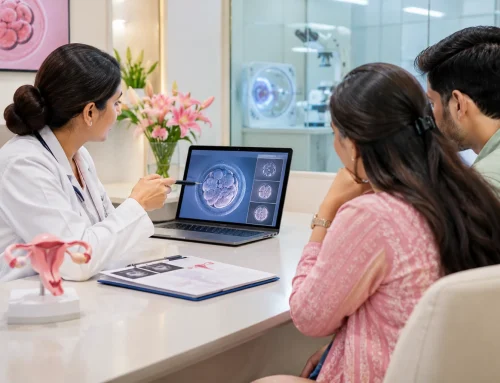
The recipient undergoes a fertility assessment, which may include blood tests, ultrasound scans, and evaluation of the uterus. The specialist discusses medical suitability, treatment options, potential risks, and expectations.
2. Donor Screening and Selection
The donor undergoes appropriate medical evaluation and screening for relevant infectious and genetic conditions, as applicable. The process should follow current legal requirements and clinical protocols.
Counselling can help the recipient understand the medical, emotional, and family considerations associated with using donor eggs.
3. Egg Collection
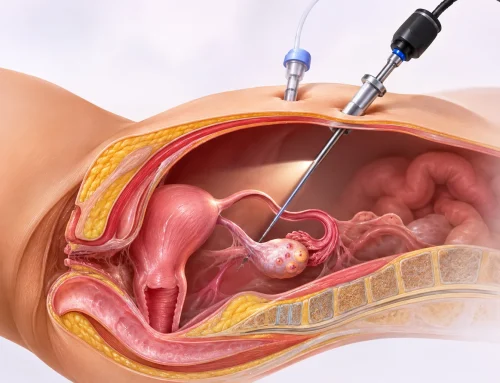
When fresh donor eggs are used, medication stimulates the donor’s ovaries to develop multiple eggs. The eggs are collected through an ultrasound-guided procedure.
Alternatively, previously frozen donor eggs may be used, depending on availability and clinical suitability.
4. Fertilisation in the Laboratory
The collected eggs are fertilised using sperm from the recipient’s partner or a suitable sperm donor. Conventional IVF or intracytoplasmic sperm injection (ICSI) may be considered depending on the clinical circumstances.
The resulting embryos are monitored in the laboratory for development.
5. Preparation of the Uterus
Medication may be prescribed to prepare the uterine lining for embryo transfer. The timing and type of medication depend on the recipient’s health and treatment protocol.
6. Embryo Transfer and Pregnancy Testing
A selected embryo is transferred into the uterus using a thin catheter. A pregnancy test is performed at the time recommended by the fertility team.
If pregnancy occurs, further monitoring helps assess its progress.
What Are the Donor Egg IVF Success Rates?
Donor egg IVF success rates depend on several factors, including donor egg quality, the number of eggs available, embryo development, sperm quality, uterine health, and the recipient’s overall medical condition.
Donor eggs may improve the likelihood of pregnancy for some people whose own eggs have age-related or other significant quality concerns. However, the treatment cannot guarantee implantation, pregnancy, or live birth.
It is also important to understand the difference between a positive pregnancy test, a clinical pregnancy, and a live birth. These are different outcomes and should not be treated as interchangeable measures of success.
When discussing results with a fertility specialist, ask about:
- The live birth rate per embryo transfer.
- Whether the reported figure relates to fresh or frozen donor eggs.
- The number of embryos transferred.
- The population and treatment period represented in the data.
- How individual medical factors may affect the expected outcome.
Published results may differ between clinics and patient groups. A personalised assessment is more useful than relying on a single percentage.
Donor Egg IVF vs Traditional IVF
| Feature | IVF with Donor Eggs | IVF with Own Eggs |
| Source of eggs | Donor | Intended parent |
| Egg collection | From the donor if using fresh eggs | From the intended parent |
| Fertilisation | In a laboratory | In a laboratory |
| Embryo transfer | Into the recipient’s uterus | Into the intended parent’s uterus or an appropriate gestational carrier |
| Main consideration | Donor screening and recipient suitability | Ovarian reserve and own egg quality |
The appropriate option depends on the fertility assessment, personal preferences and relevant medical and legal considerations.
Is Sperm Donation Also Needed for Donor Egg IVF?
No. Donor eggs do not automatically mean donor sperm is required. Eggs may be fertilised using sperm from a partner when medically suitable, or donor sperm may be considered when indicated.
People researching a sperm donation center in Ahmedabad should check that any relevant facility or program follows applicable Indian regulations, donor screening requirements, consent procedures, and confidentiality standards.
The fertility specialist can explain whether donor sperm is appropriate and how it may affect the treatment plan.
Conclusion
IVF with donor eggs may be an option for people experiencing certain egg-related fertility challenges or carrying particular genetic risks. Understanding the donor egg IVF process and the factors that influence outcomes can help individuals make informed decisions.
Flora Fertility Centre can provide fertility-related information and assessment options to help patients understand which treatments may be medically appropriate. The next step is to discuss individual circumstances, potential benefits, risks, and realistic expectations with a qualified fertility specialist.